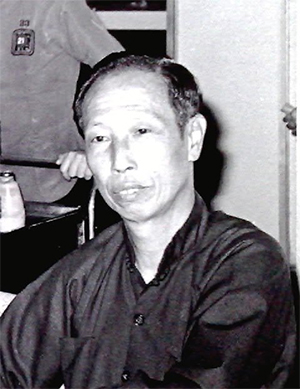
向葉瑞師公致敬 Tribute to Ip Shui 1913 – 2004
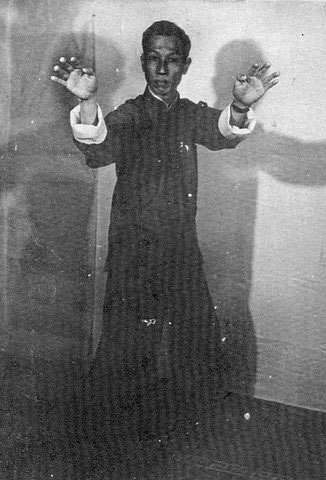
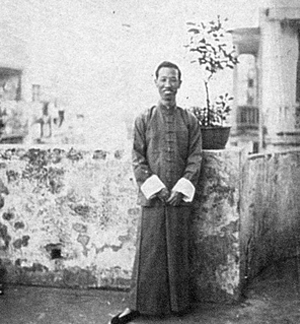
葉瑞師公於二零零四年四月二十七日凌晨安然辭世,享年九十一。其一生正好見證並承接其師劉水祖師一脈南派螳螂之興衰,可謂一代風骨之終章。劉水乃華南「三虎」之一,其藝精深,門風嚴謹;師公得其真傳,後繼有人。
師公少歲習洪家拳,後得遇劉水祖師,始入南派螳螂之門。此門以短橋窄馬、貼身發勁見長,雖身形細小者亦可練就剛勁之力,令葉公大為折服。然當年門內多為客家子弟,師祖身為新會人,初入門時備受排擠,甚至遭同門欺凌。幸得劉水祖師親自提攜,閉門悉心教授,反使其功力突飛猛進,根基愈見深厚。
On Tuesday 27th of April 2004 at approximately 4.00 am, Grandmaster Ip Shui passed away in his sleep. He was 91 years old. His death symbolising the end of an era of the descending students of Lau Shui, his master. Lau Shui was one of the three famous tigers of Southern China.
Grandmaster Ip Shui is survived by his two daughters and sons, four grandchildren and three great grandchildren. His eldest son, Master Ip Chee Keung was named the heir to the Tung Kong Chow Gar Tong Long Pai, Southern Mantis Kung Fu.
In order to tell his story, we will start at the beginning. In 1929, at the age of sixteen, Ip Shui was introduced to Hung Gar Kung Fu, through a close friend of his Grandfather. Ip Shui devotedly practised Hung Gar for a period of two years, until one of his school friends introduced him to Master Lau Shui and the Southern Mantis system. A style, which surprised him with its short-range power and its ability to create strength in even the smallest man.
其後師公曾一度流離失所,蒙師收留,遂更專心向學,並於期間結識李群女士,後結為伉儷,定居香港九龍紅磡。日軍侵港期間,民生困苦,武藝亦須秘練以避禍。劉水祖師於一九四二年病逝,門下高足僅存數人,師公為最後在世者。
Training at the new school was made very difficult for the young Ip Shui though. The main problem he faced was discrimination, he was not Hakka Chinese. It is the Hakka Chinese that are accredited for developing this particular style of Kung Fu. Ip shui was in fact San Wui Chinese and was in turn considered an outsider in this culture.
The discrimination was so great, that the other students began to physically beat Ip Shui and further refused to train and practise with him. In order to resolve this situation Ip Shui’s master, Lau Shui focused on training with him. It was during this intensive one-on-one training that Ip Shui was given the opportunity to develop a higher level of skill and knowledge at an accelerated rate.
Some years later Ip Shui was kicked out of home, having no where to live, his master gave him room and board, on the proviso that he continue to train hard and do well for the style. It was during this period that he met his wife to be, a young lady by the name of Li Kwan,(not his masters daughter as some still assume). The couple dated for several years, and with the blessing of his master,(as was the custom back then) they married and moved to the area of Hung Hom, Kowloon, Hong Kong. In 1940 Ip Shui and his wife took upon themselves to look after his elderly teacher. Soon after, tragedy fell upon Hong Kong (1941) with the invasion of the Japanese armed forces. Life as the Hong Kong people knew it had ended. Many suffered at the hands of the Japanese, food was rationed and conditions were difficult. Hong Kong people were forced to eat whatever they could, many ate bark off trees and dead animals found in the streets. Martial Art practice was banned and training was done in secret in order to avoid arrest and severe punishment. A large number of Chinese died during the Japanese occupation, many due to famine, disease and lack of medicine.
Lau Shui fell victim to illness and passed away during the occupation in 1942. He was 73 years of age. His death left behind only 5 high level students, this included Chu Gun Wah, Lam Wah, Tam Wah, Tarm Jill and Ip Shui. Master Ip Shui was the last survivor of this group. (Chinese surname comes first).
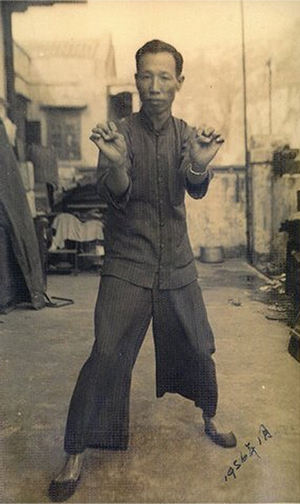
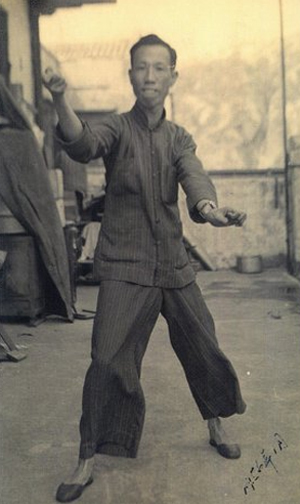
其後師公曾一度流離失所,蒙師收留,遂更專心向學,並於期間結識李群女士,後結為伉儷,定居香港九龍紅磡。日軍侵港期間,民生困苦,武藝亦須秘練以避禍。劉水祖師於一九四二年病逝,門下高足僅存數人,師公為最後在世者。
一九四六年,師公於香港一戰成名。時有南方拳師設擂挑戰全港,師公代同門出戰,赤手空拳苦鬥近十五分鐘,終獲全勝,自此名震香江。其後開館授徒數十載,應戰無數,晚年尤以手法飄忽、難以捉摸著稱,得「濕水欖核」之譽。
師公一生低調,不慕虛名。雖屢有報章、軍方邀請,皆淡然處之,常言:「習武為強身健體,只可用以自衛。」其教誨重德輕技,愈高者愈隱,不事張揚。
Grandmaster made his name in Hong Kong in 1946, when a famous Kung Fu Master from Southern China came to HK (style withheld). He challenged ‘any one in all of HK to come and fight’. He then set up a western boxing ring in one of the main parks of HK and waited for fighters. If the Southern Master was undefeated, he would set up a branch in HK.
One of the Masters to accept the challenge was Ip Shui’s Kung Fu brother (name withheld), who changed his mind on the way to the fight after hearing of previous teachers who had been easily beaten. To save face for his departed master, Ip Shui determined to take his place.
The challenge lasted nearly fifteen minutes- there were no rules, gloves or protective gear and no stoppages. The fight would end when the other man was physically incapable of continuing. Ip Shui was declared Champion of this encounter and over night became famous throughout HK.
In 1948 he opened his first public school. For three decades after this time Ip Shui challenged all comers. Many challengers came from a number of provinces of China, HK and Macau. Ip Shui was in his early sixties at the time of his last challenge, and so slippery were his hands, that it earned him the nickname ‘Wei seed’ or Sub Shui Lam Wat in Cantonese meaning ‘difficult to catch’. Another prominent master, who he had defeated in the 1970’s, respectively gave Ip Shui this name.
During his career numerous authors approached Ip Shui (many of them from magazines, newspapers and television companies) to provide background information about his life and his master’s teachings. On two occasions, he was approached by the Chinese military, to assist teaching the armed forces. However by this time Grandmaster was older and believed he had nothing more to prove, as he had spent his life doing just that. His belief in the end was the people that should know, would know.
其妻李群女士於一九九八年辭世。師公辭世之時,海內外武林人士多有弔唁,足見其德望。本某曾隨師公及其子習藝多年,親炙教誨,感其為人深沉通透,洞察人心。與之初見,寡言之間,已覺心思難藏,印象難忘。
Grandmaster’s wife, Si Po Li Kwan, passed away in 1998; she was 85 years of age. Grandmaster survived his wife by six years. His death occasioned numerous Martial Artists, many of these where principals and representatives of various Kung Fu systems from around the world. His pallbearers were Kong Pui Wai, Lung Kai Ming (HK Kung Fu Assoc), Wong Kwok Cheung (Lung Ying, Dragon style), Cheung Kwok Wah (Ba Hok, White Crane), Kwok Pui Kai (Ching Mo Martial Art), Cheng Wan (Chu Family Mantis Kung Fu), Leung Ting (Wing Chun), Wong Pak Yau (Pak Mei, White Eyebrow).
On a personal note, I have studied under Grandmaster Ip Shui and his son for many years now, whilst living in HK and here in Australia. Both men spent many occasions staying in Australia after I returned home. At other times (usually twice a year), I would stay in Hong Kong at Grandmaster’s home in Kowloon City.
He was indeed a very private and spiritual man. He had an amazing ability (some say psychic) to read and conceptualise the true character of a person. On many occasions, I witnessed his initial introductions to numerous people and recall my first ever meeting with him. I remember the event so clearly- we spoke very little words and instantly I was taken aback as I felt my spirit and thoughts exposed.
It took some years whilst living there for Grandmaster to become used to this particular Australian. But after time he became far more open in all of life’s matters, and the personal side of Grandmaster was very different to what I had ever encountered before. He was a man of very high stature in Asia, but most times you would never pick it and displaying his ability was rarely seen outside of training. “Martial Art is a tool to enhance the function of the body”, he would say, and “must be used for a defence purpose only”.
今師公仙逝,亦象徵上一世紀南派武學一段根脈之漸隱。昔日宗師,所餘無幾,不出十年,或將盡成絕響。得遇此等人物,實人生難再之緣。昔日臨別,師公問及身後之事,本某唯答:此恩此藝,沒齒不忘。
保羅伯倫 字
Applying his theory meant the more senior the status, the more hidden the artist becomes. The passing of Grandmaster has ended the old linage of the last century, the root of Martial Arts in the West. There are few old Kung Fu masters left in this part of the world now and within the next decade they will all be gone.
My time with Grandmaster, though relatively short in reference to his age, was one of the hardest but greatest times I have endured to date. Knowing and being taught by him was a privilege, a privilege that will never be repeated- for this opportunity only comes once in a man’s life. On my last visit he asked me what I would do when he died. I told him I would never forget.
Paul Brennan Sifu